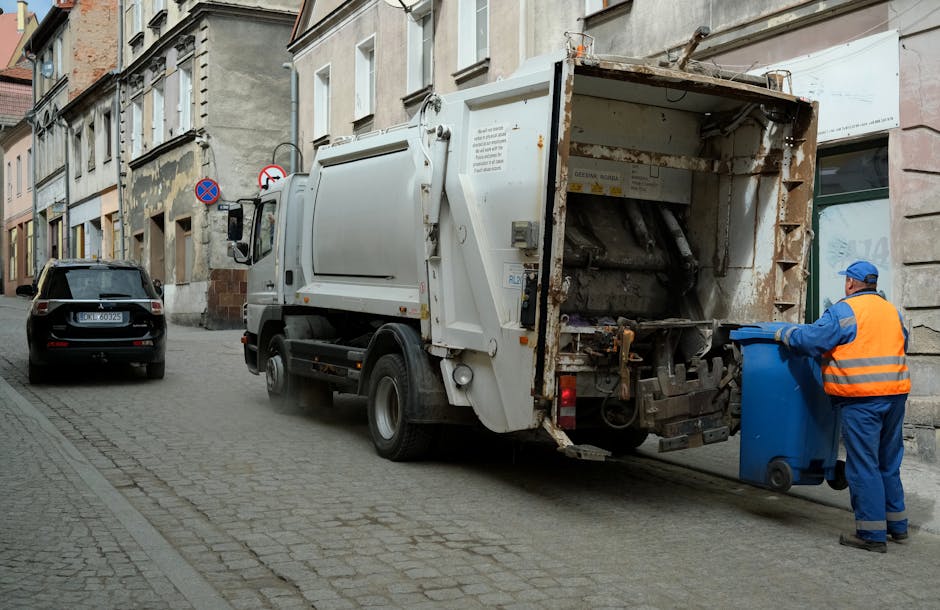
Rubbish removal without skips guide for Upminster station
If you need to clear waste near Upminster station, but a skip feels awkward, expensive, or simply over the top, you are in the right place. This rubbish removal without skips guide for Upminster station explains the practical alternatives: how they work, what they suit, and how to stay on the right side of UK waste rules without turning your day into a small logistical headache. To be fair, most people just want the rubbish gone quickly, safely, and without blocking the pavement for a week. Fair enough.
Whether you are clearing a flat, emptying a loft, dealing with builder's rubble, or getting rid of a few bulky items after a move, there are better options than hiring a skip in many cases. You will also see where professional waste removal fits in, when a specialist service is more sensible, and how to avoid the usual mistakes people make when trying to do it themselves.
Here is the short version: the best skip-free approach is usually one that matches the waste type, the amount you have, and the access at your property. The rest of this guide breaks that down properly.
Table of contents
- Why this matters near Upminster station
- How skip-free rubbish removal works
- Key benefits and practical advantages
- Who this is for and when it makes sense
- Step-by-step guidance
- Expert tips for better results
- Common mistakes to avoid
- Tools, resources and recommendations
- Law, compliance, standards and best practice
- Options and comparison table
- Case study or real-world example
- Practical checklist
- Conclusion
- Frequently asked questions
Why Rubbish removal without skips guide for Upminster station Matters
Upminster station is a busy, lived-in part of Havering, with homes, flats, shops, offices, commuters, and narrow access points all competing for space. That matters because waste clearance is not just about loading a van or dropping a container outside. It is about fitting the job into real life. Roads can be tight, parking can be limited, and not every property has the kind of frontage where a skip can sit happily for days without causing irritation.
Skip-free rubbish removal matters most when space is tight or time is short. If you live in a flat above a parade of shops, if you are on a terraced street with no driveway, or if you need rubbish collected between train times and work shifts, a van-based collection can be a much cleaner fit. It keeps the process moving. No permit faff, no container sitting outside for a week, no awkward manoeuvring around one more thing on the pavement.
There is also the local reality of mixed waste. Around transport hubs, a clear-out often includes a jumble of items: packaging from home moves, old furniture, office clutter, garden waste, or a builder's mix of timber, plasterboard and offcuts. For that kind of job, the flexibility of a tailored collection often beats a one-size-fits-all skip.
Expert summary: if your waste is varied, access is limited, or you only want one tidy uplift, skip-free rubbish removal is often the simpler and more controllable option. The best results usually come from sorting the waste first, then choosing the collection method that suits the volume and access, not the other way round.
It is also worth thinking about presentation and neighbour impact. A pile of waste outside the front door can look untidy and invite complaints. A planned collection, by contrast, tends to be quicker and less disruptive. Small thing, but it matters.
How Rubbish removal without skips guide for Upminster station Works
Skip-free rubbish removal usually means one of three things: a man-and-van collection, a full waste-removal team loading directly from your property, or a scheduled clearance for a specific type of waste. The collection vehicle arrives, the team loads your items, and the waste is taken away in one visit. In many cases, the team can do the lifting for you, which is a relief if you are dealing with heavy or awkward items.
The process is generally straightforward, but the details matter. First, you describe the waste as accurately as possible. Then, the provider estimates the load size, type, and access conditions. After that, collection is arranged. On the day, the crew checks the waste, confirms the price where applicable, and removes the items. Simple enough in theory. In practice, clarity at the start saves a lot of bother later.
For example, a customer clearing a one-bedroom flat near the station may not need a skip at all. A van load or two of mixed items might be enough. A small office might just need old chairs, shredding bags, and a handful of broken fittings removed in a single visit. Meanwhile, a garden tidy-up may call for a dedicated garden clearance rather than a general skip sitting on the road.
There are some practical variations too:
- Man-and-van clearance: best for mixed household waste, bulky items, and fast turnarounds.
- Room-by-room clearance: useful for flats, lofts, garages, and whole homes.
- Specialist item removal: ideal for fridges, mattresses, sofas, or appliances.
- Commercial waste uplift: better for shops, offices, and trade waste that needs proper handling.
If your job includes furniture, you may want to look at furniture disposal or furniture clearance rather than trying to sort it piece by piece. Those services are designed to take the sting out of bulky items, which is useful when you are staring at a wardrobe and wondering how it got that heavy.
Key Benefits and Practical Advantages
There are a few reasons people near Upminster station choose rubbish removal without skips instead of hiring a skip. The obvious one is convenience, but there is more to it than that.
- No skip permit in many cases: if the container would need to sit on a public road, a skip permit may be required. Skip-free removal often sidesteps that issue entirely.
- Better for tight access: some properties simply do not have room for a skip, or a skip would make access awkward for everyone else in the building.
- Faster turnaround: waste can often be removed on the same day or the next visit, which is useful when you are on a deadline.
- Less mess outside: your rubbish is loaded directly into the vehicle rather than waiting outside in a container.
- Flexible for mixed loads: one collection can handle several waste types, provided they are accepted and properly separated where needed.
- More help with lifting: many services include loading, which is a big deal if you are dealing with awkward pieces or stairs.
There is also a subtle practical advantage: you see the space come back immediately. That feels better than looking at a skip for three days thinking, "right, that's still there then." The job feels finished once the van drives away.
For businesses, the benefit is even clearer. A shop refit, office clear-out, or end-of-lease tidy-up often needs speed and discretion. If you need regular support, business waste removal is often more suitable than an occasional skip hire arrangement. And if your waste includes confidential paperwork, confidential shredding gives you a safer route for sensitive documents.
Who This Is For and When It Makes Sense
This approach suits a surprisingly wide range of people. If you are close to Upminster station and your waste job is more practical than industrial, there is a good chance skip-free clearance will suit you.
- Flat residents: especially where stair access, shared entrances, or limited parking make skips awkward.
- Home movers: people clearing out unwanted items before sale, tenancy change, or a refurb.
- Landlords and letting agents: when a property needs to be turned around quickly between occupiers.
- Tradespeople: for small builder's waste, especially after light refurb jobs or snagging work.
- Office managers: when old desks, chairs, archive boxes, and office clutter need removing together.
- Household declutterers: anyone finally tackling the garage, loft, or spare room that has been collecting "useful" things for years.
It makes sense when the load is not massive enough to justify a skip, or when access and local parking would turn skip placement into a hassle. It also makes sense when you want help with the lifting. Not everyone has a friend with a van and a strong back on standby, after all.
For larger property clearances, a service such as house clearance, home clearance, or flat clearance may be the better fit because it handles the whole space rather than only the visible pile in the hallway.
Step-by-Step Guidance
If you want the process to go smoothly, the best approach is boringly simple. Boring is good here. Boring means predictable, and predictable means less stress.
- Sort the waste into rough categories. Separate furniture, bagged rubbish, green waste, electrical items, and anything hazardous. You do not need perfection, just a sensible first pass.
- Check what should not go together. Some items need special handling, and some waste types are better collected separately. If in doubt, ask before the collection day.
- Estimate the volume honestly. A rough count of bin bags, mattresses, chairs, or boxes is usually enough to begin with. Do not underplay it. Everybody does, then suddenly there is a second pile in the hallway.
- Share access details. Mention stairs, parking, entry codes, loading restrictions, or narrow paths. This is especially important near busy station roads or shared blocks.
- Get a clear price or quote structure. Ask what is included: labour, loading, disposal, VAT where applicable, and any special item charges.
- Prepare the items for pickup. Put waste where the team can access it safely, but do not block exits or fire routes.
- Walk through the load on arrival. A quick check before lifting starts avoids confusion later. It takes a minute and can save a lot of back-and-forth.
- Keep the paperwork. Any proper carrier should be able to explain how the waste is handled. Retain records if you are a business or landlord.
If you are dealing with a mixed household clear-out, you may find garage clearance or loft clearance more useful than a broad "rubbish removal" label, because the waste profile is often different from room to room.
And one small but important note: if there are fridges, freezers, or white goods in the load, mention them early. Appliance disposal is one of those things that sounds simple until someone realises there is a heavy door, coolant considerations, and not much space on the landing. For those items, fridge and appliance removal can be the cleaner solution.
Expert Tips for Better Results
After enough clearances, a few patterns become obvious. The jobs that go well are the ones where the customer has thought two steps ahead. Not obsessively. Just enough.
- Take a quick photo of the waste before booking. This helps with pricing and avoids awkward surprises.
- Keep hazardous items separate. Paint, chemicals, batteries, gas canisters, and similar materials should never be bundled in with general rubbish.
- Break down bulky items where it is safe to do so. A dismantled wardrobe is easier to move than an intact one, especially in narrow hallways.
- Label what definitely stays. If you are clearing a loft, garage, or shared storeroom, a bit of masking tape can prevent expensive mistakes.
- Choose collection timing carefully. Early morning works well for busy streets. Midday can be trickier near station traffic and school runs.
- Ask about recycling routes. A good provider should explain how they separate recyclable materials and dispose of residual waste responsibly.
One practical tip that saves time: if you know you have a lot of furniture, book it as furniture-focused clearance rather than as loose rubbish. The load is easier to assess, and the team can arrive prepared for the weight and handling. Likewise, for domestic clutter, house clearance often gives a more efficient result than piecemeal collection.
Truth be told, the best "hack" is really just good preparation. Not glamorous, but it works.
Common Mistakes to Avoid
People usually do not get this wrong because they are careless. They get it wrong because they are trying to be efficient and end up guessing. Happens all the time.
- Underestimating the amount of waste: what looks like four bags in the morning often becomes ten by lunch.
- Mixing prohibited items with general waste: hazardous waste needs specialist handling and should never be casually added to a mixed load.
- Forgetting access constraints: a van may be able to park nearby, but loading still needs a clear route.
- Leaving sorting until the last minute: the collection runs smoother when items are grouped in advance.
- Assuming every item is collected the same way: mattresses, appliances, and WEEE-style electrical items can require different handling.
- Choosing only on price: cheap and cheerful can become not-so-cheerful if the service is vague, delayed, or incomplete.
A particularly common error is forgetting that some waste cannot be handled as ordinary household rubbish. If you have chemicals, paints, asbestos-suspect materials, or anything you would not happily store in the kitchen, pause and ask for advice. In those cases, hazardous waste disposal is the safer route.
Another one: people sometimes assume a skip is the default answer for every clearance job. It is not. Often, the better answer is a direct load-out, especially when the rubbish is already bagged, stacked, or ready to be carried out. The skip idea is familiar, yes, but familiar does not always mean practical.
Tools, Resources and Recommendations
You do not need a van load of gear to prepare for rubbish removal, but a few simple tools make life easier.
- Heavy-duty bin bags: for mixed light waste, soft furnishings, and bagged clear-outs.
- Masking tape and marker: handy for labelling keep, donate, and remove zones.
- Gloves and sturdy footwear: basic protection for moving items around safely.
- Dust sheets or cardboard: useful if you are carrying items through a clean hallway or stairwell.
- Trolley or sack truck: helpful for heavier boxes, if available and safe to use.
- Phone camera: surprisingly useful for documenting the load and sharing it for quotes.
On the service side, a few website pages are especially useful if you are comparing options. For pricing questions, see pricing and quotes. If you want to understand what happens to waste after collection, recycling and sustainability is worth a look. If you are not sure whether your items would fit in a skip at all, what can go in a skip is a helpful comparison point, even if you do not plan to use one.
For confidence around service quality and operations, it is also sensible to review insurance and safety and the company's health and safety policy. That is not flashy reading, obviously, but it tells you a lot about how seriously a provider takes the job.
Law, Compliance, Standards, or Best Practice
Rubbish removal is not just a practical service; it comes with responsibilities. In the UK, waste should be handled by a legitimate carrier and taken to an appropriate facility. As a customer, you want to make sure the company you use can explain what happens to the waste and how it is managed. You do not need to become a compliance expert, but you should expect clear answers.
For householders, the main best practice is simple: do not hand waste to anyone who seems vague about where it goes. If you are paying for removal, you are still responsible for making sensible choices about who takes it. For businesses, the expectations are higher, especially where records, duty of care, or repeat collections are involved. That is where having a consistent partner for business waste removal can save time and reduce risk.
Special items need extra care. Fridges, sofas, mattresses, electricals, and confidential documents are not just "stuff"; they often have separate handling requirements. If the load contains electronics, appliance removal can help keep the process clean and sensible. For worn-out beds or seating, mattress and sofa disposal is often the better fit than general mixed rubbish collection.
And a note on hazardous waste again, because it deserves repeating: never assume chemicals, oils, unknown powders, or strong cleaning agents can be thrown in with household rubbish. They need proper handling. No shortcuts there.
Options, Methods, or Comparison Table
If you are deciding between approaches, a quick comparison can help. The "best" option depends on access, waste type, and how much lifting you want to do yourself.
| Option | Best for | Main advantages | Possible drawbacks |
|---|---|---|---|
| Skip-free van collection | Mixed household waste, bulky items, quick clear-outs | Fast, flexible, minimal street clutter | May need accurate load estimate and good access |
| Traditional skip hire | Ongoing DIY jobs, heavy builder's waste, larger site work | Useful for continuous loading over time | May need space and possibly a permit |
| Specialist clearance service | Homes, flats, offices, garages, lofts, or item-specific waste | Tailored handling, loading help, more convenience | Needs clear briefing to match the right service |
| Self-haul to a facility | Small amounts of waste if you have transport | Direct control over timing | Time-consuming, lifting burden, multiple trips |
For many readers near Upminster station, skip-free collection wins because it blends convenience with control. If you need help with a trade-style load, a service like builders waste clearance can be a smarter option than piling broken materials into a skip and hoping for the best.
Case Study or Real-World Example
Here is a realistic example. A couple moving out of a flat near Upminster station had a mix of old bedroom furniture, flat-pack packaging, a broken bedside table, several bin bags, and a fridge that had stopped working. They had no lift, limited parking, and no interest in sitting around waiting for a skip permit to be sorted. Understandable, really.
Instead of hiring a skip, they booked a skip-free clearance. They grouped the waste into two areas: bulky items near the front door and bagged rubbish in the hallway. They mentioned the fridge at booking stage, which mattered because appliance removal needed to be included properly. The team arrived, checked the items, loaded everything in one go, and left the area tidy. The whole job took far less time than the couple expected, and they were able to hand the keys back without a last-minute panic.
The lesson was not that the service was magical. It was that the right method matched the situation. If they had had a driveway and a week-long renovation, a skip might have been fine. But for a small flat move with awkward access, a skip-free solution was a better fit.
A similar pattern comes up with office moves. A manager clearing surplus desks, shredding bags, and a few broken chairs often does better with one coordinated uplift than with a skip outside the building. In those cases, office clearance saves a lot of running around.
Practical Checklist
Use this checklist before collection day. It is plain and a bit unglamorous, but it works.
- Identify the waste type: general rubbish, furniture, electricals, garden waste, or construction debris.
- Separate anything hazardous or specialist.
- Count or estimate the volume honestly.
- Check stairs, gates, parking, and access routes.
- Move items to a safe, reachable spot.
- Label anything that must not be taken.
- Confirm whether loading assistance is included.
- Ask how pricing is calculated.
- Keep pets, children, and bystanders away from the loading path.
- Save any service notes or confirmation details.
If your waste includes mattresses or sofas, it can help to mention that early rather than leaving it as an afterthought. The same applies to fridges and appliances. A good provider would rather know in advance than arrive and discover a hidden second job.
Quick takeaway: the smoother the prep, the faster the collection. The less guessing, the better the result.
Get a free quote today and see how much you can save.
Conclusion
Rubbish removal without skips for Upminster station is often the simplest, neatest, and most flexible way to deal with unwanted waste. It is especially useful where access is tight, time is limited, or the waste mix is too awkward for a skip to be the sensible answer. You get a faster turnaround, less disruption, and a service that can be matched to the actual job rather than a generic container sitting outside all week.
The trick is to plan just enough: sort the waste, share the access details, be honest about the volume, and use the right specialist route where needed. That is how you avoid most of the stress. Not all of it. Waste clearance is still waste clearance. But most of it, yes.
And once it is gone, you really do notice the difference. Space feels lighter. The room sounds quieter. The job is done, properly done, and that is a good feeling.
Frequently Asked Questions
What does rubbish removal without skips mean?
It usually means waste is collected directly from your property by a van and crew, rather than being left in a skip outside. The team loads the rubbish for you and takes it away in one visit.
Is skip-free rubbish removal better than hiring a skip?
It depends on the job. For small to medium loads, limited access, or mixed waste, skip-free removal is often easier. For long DIY projects with ongoing waste, a skip can still be useful.
Do I need a permit if I use rubbish removal without a skip?
Usually no, because nothing is being left on the road. That is one of the main reasons people choose this option, especially in busier areas near transport links.
Can bulky furniture be taken without a skip?
Yes. Sofas, wardrobes, tables, beds, and similar items are often removed as part of furniture clearance or a general waste uplift, provided access is safe.
What if I have a fridge or washing machine?
Say so when you book. Appliances often need separate handling, so services like fridge and appliance removal are useful for those items.
Can builders' waste be removed without a skip?
Yes, for many smaller jobs. Broken plasterboard, timber offcuts, packaging, and rubble can often be collected directly, especially through builders waste clearance.
How do I know if my waste is hazardous?
If it includes chemicals, oils, unknown powders, batteries, paint, or other potentially harmful items, treat it carefully and ask before mixing it with general waste. When in doubt, use hazardous waste disposal.
Is this suitable for flats near Upminster station?
Very often, yes. Flats, maisonettes, and shared buildings can be awkward for skip placement, so a direct collection is usually much more practical.
How should I prepare for collection day?
Sort items into rough groups, clear access routes, check parking or entry details, and keep anything you are not removing clearly marked. A little prep saves time and confusion.
What happens to the rubbish after collection?
It should be sorted and taken to appropriate facilities for reuse, recycling, or disposal, depending on the material. A responsible provider should be able to explain its recycling approach clearly.
Can businesses use skip-free rubbish removal too?
Yes, absolutely. Offices, shops, landlords, and small commercial sites often prefer it because it is faster and less disruptive than keeping a skip outside.
How do I choose the right service for my waste?
Match the service to the waste. Furniture goes best with furniture-specific removal, rooms and properties suit clearance services, and mixed day-to-day rubbish is usually better handled through waste removal. If you are unsure, start with a clear quote request and explain the access, volume, and item types.
If you want to understand the company behind the service, you can also review the about us page, the terms and conditions, and the payment and security information before booking.